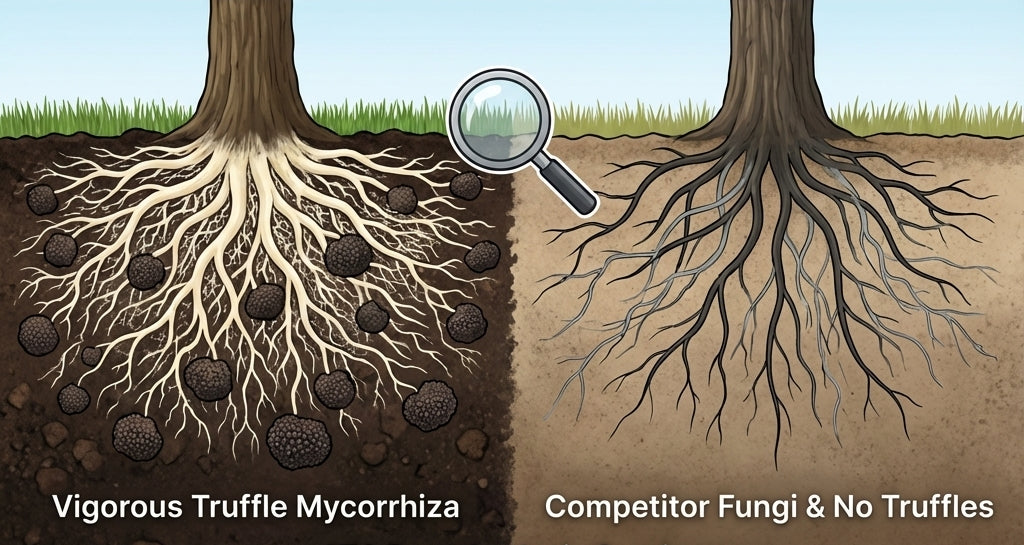
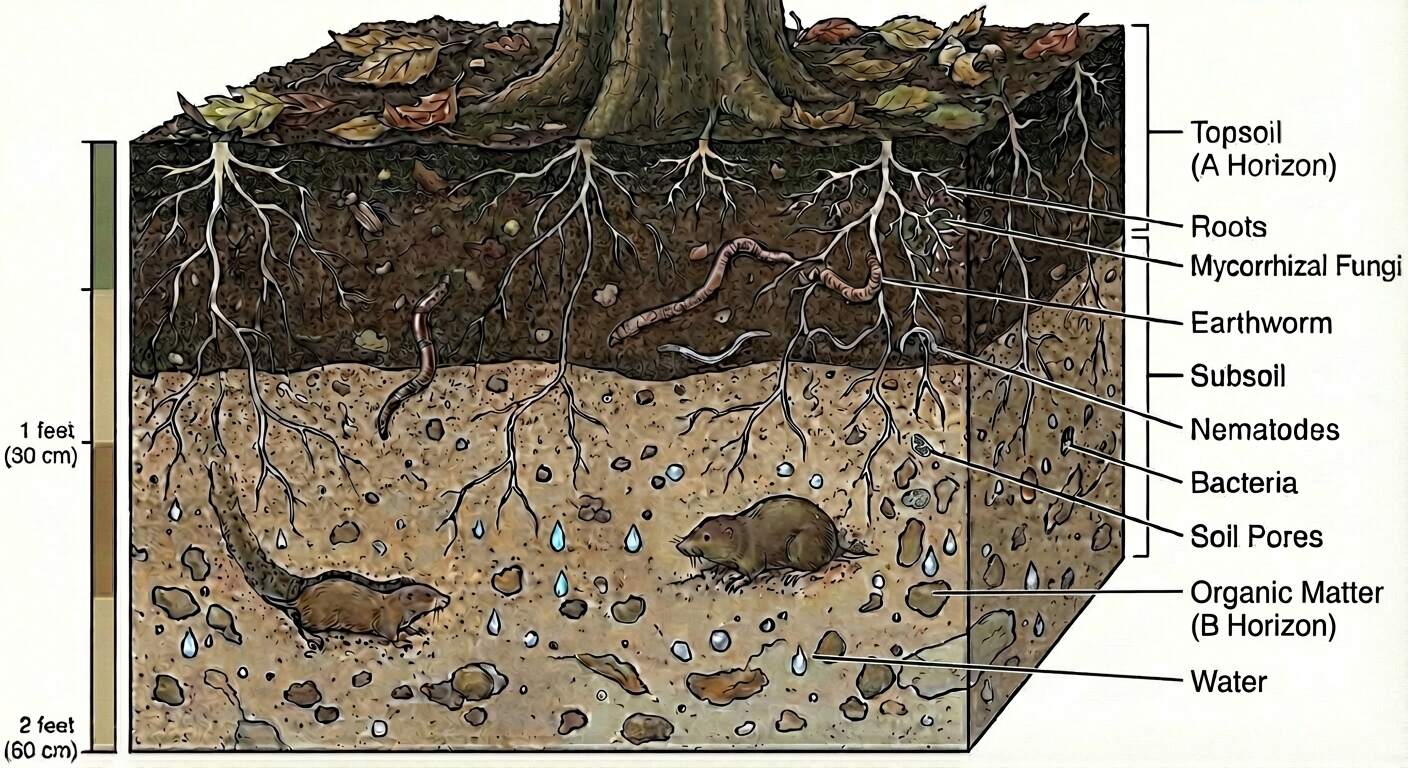

We provide clear instructions (or direct support, depending on service level) on how and where to collect representative root samples from your orchard, so the results actually reflect orchard status rather than one random tree.

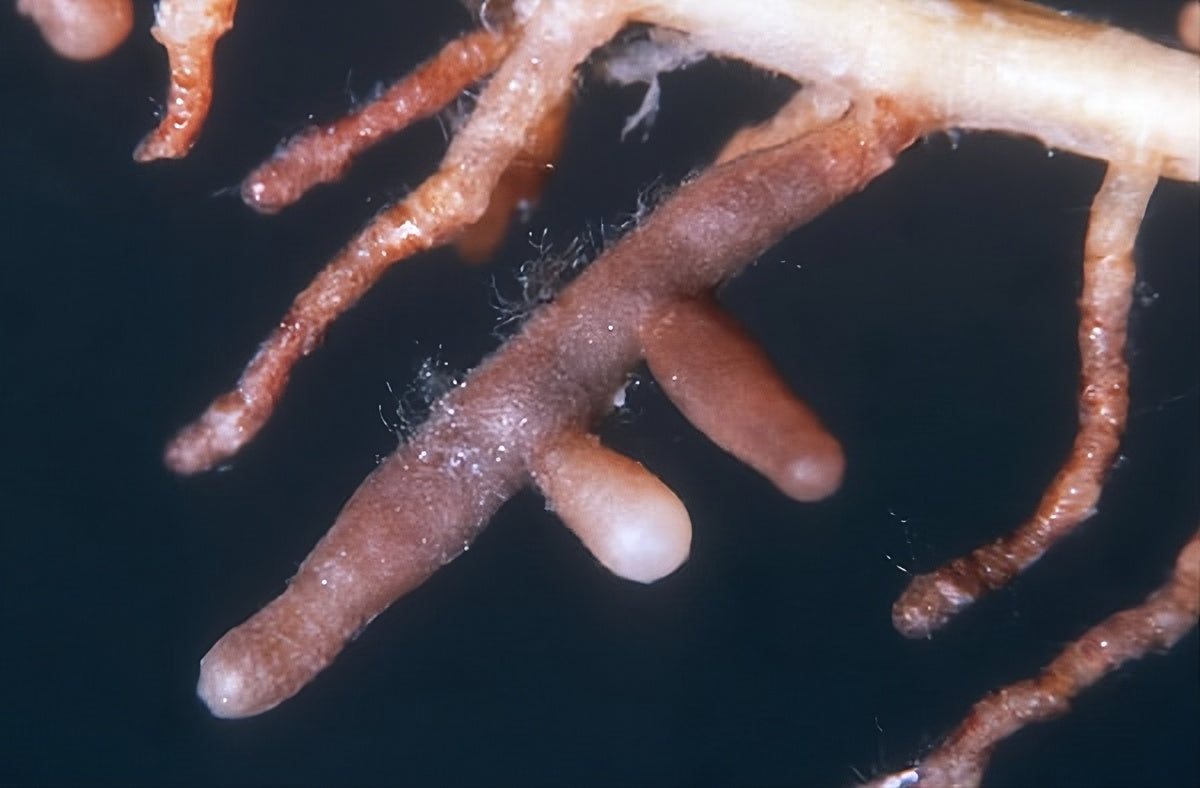
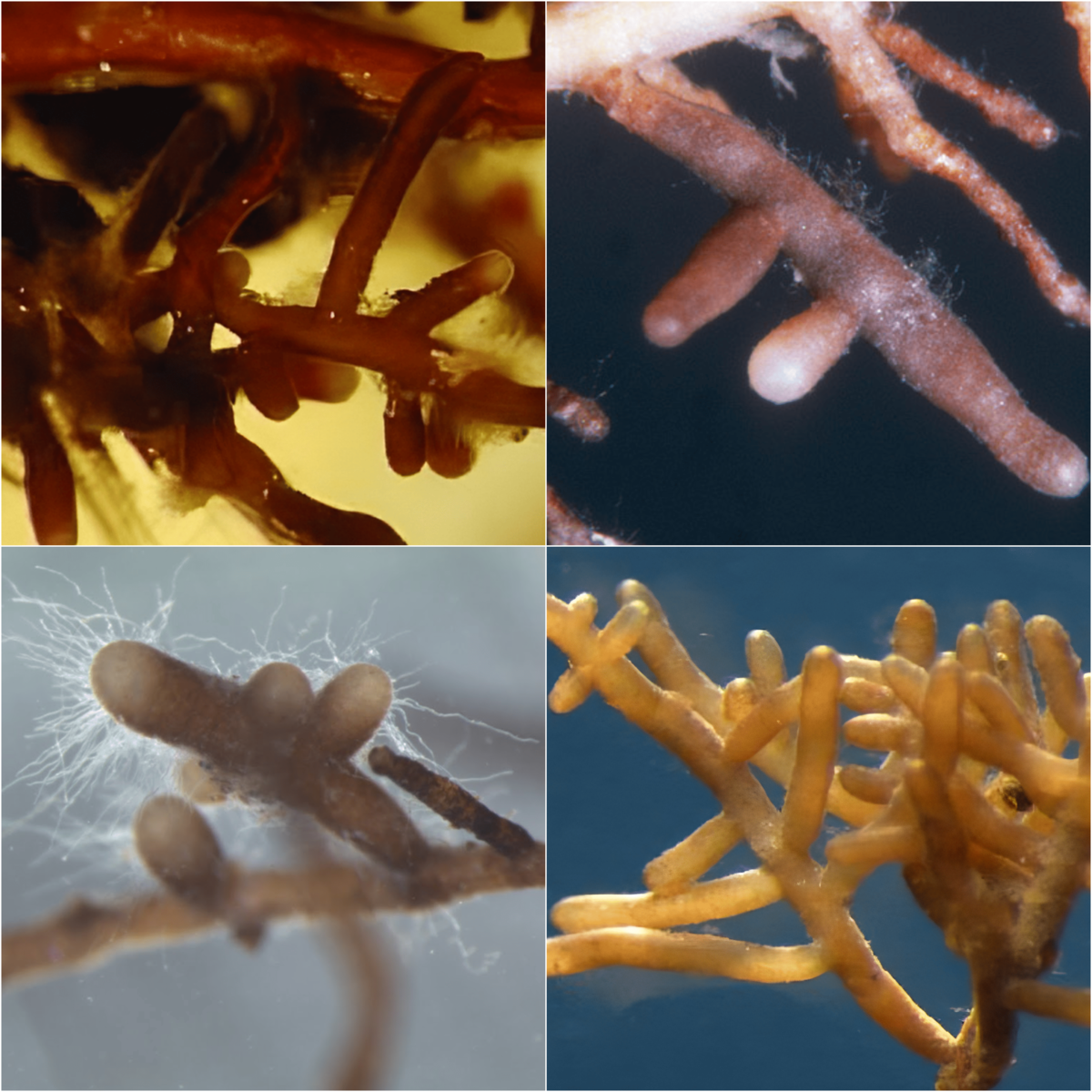
Specialist technicians examine root tips under the microscope to:
- Confirm the presence of your target truffle species’ mycorrhiza.
- Estimate the level and quality of colonization (for example, proportion of colonized root tips, development stage).
- Note signs of stress or poorly developed mycorrhiza.

Where appropriate, we assess the presence and relative abundance of other ectomycorrhizal fungi on the roots, including potentially competing or contaminant species. In selected cases, DNA-based methods may be used to clarify species identity if warranted.

The raw numbers only tell part of the story. We interpret your results in the context of:
- Orchard age
- Species planted (Périgord, Burgundy, etc.)
- Climate and region
- Tree species
- Soil and irrigation context
American Truffle Company and our scientific partner Mycorrhizal Systems Ltd. have built one of the largest unified datasets of truffle cultivation sites globally, across diverse climates and soils. That allows us to translate root data into realistic expectations and practical recommendations.

You receive a concise, decision-oriented report that may address, for example:
- Whether colonization is on track for orchard age.
- If contamination is a concern, and what to do about it.
- Whether irrigation, groundcover, or nutrient management should be adjustedin light ofmycorrhiza status.
The aim is always the same: to increase the probability of strong, consistent truffle production over the life of the orchar